
Pool Resurfacing West Lake Hills, Texas
Our Resurfacing/Remodeling Process
We value your schedule and work quickly!
Reach Out For Your Free Quote
Professional Property Review
Honest Service Costs
The Transformation Begins!
West Lake Hills sits on steep limestone terrain. A large share of the pools we service reflect that: custom gunite pools built into hillside lots, some with negative-edge designs looking out toward Lake Austin. Many date back to the 1980s through early 2000s, when the neighborhood saw a wave of custom home construction.
Pool Resurfacing Austin Tx has worked on pools throughout West Lake Hills since 2004. On one recent hillside remodel off West Lake Hills Boulevard, we had to stage all our equipment on the street and hand-carry materials down a switchback path to the pool deck. That’s not unusual here.
If your pool surface feels rough, shows mineral buildup, or has cracking along the coping, resurfacing addresses the cause instead of covering it up. Request a free pool inspection and we’ll walk you through what we find.
Pool Resurfacing Near Me
Professional Pool Resurfacing Services in West Lake Hills, Texas
Pool Remodeling
Older custom pools rarely need just one thing fixed. By the time a homeowner calls about a remodel, we’re usually looking at dated tile, aging equipment, and a finish that’s overdue, all at once. We inspect the full pool system before scoping anything, so the quote reflects the actual project, not a guess.
Pool Resurfacing
Mineral buildup is the top reason people call us for resurfacing. Once scale sets into a rough surface, acid washing won’t undo it. Resurfacing is the fix at that stage, not a workaround.
Pool Replastering
Standard plaster holds up 7 to 10 years in most cases we see. On a decent number of pools from the late 1990s and early 2000s, we’ve found the plaster already worn through around steps and benches well before the rest of the surface looked bad. Homeowners are often surprised the wear isn’t uniform.
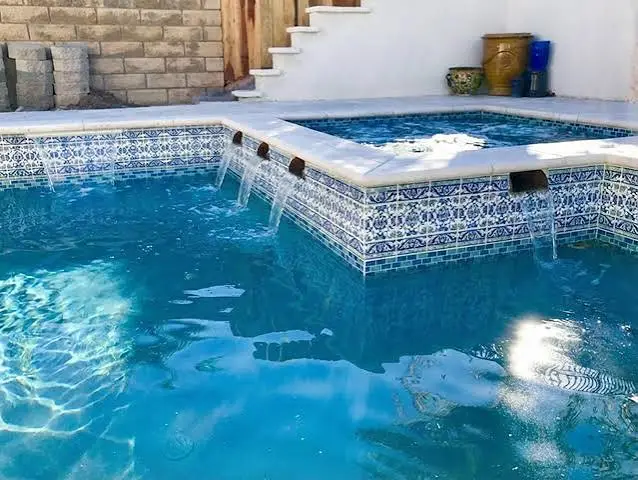
All Tile Pools
Tile pools fail section by section, not all at once. Grout goes before the tile does, usually. We test adhesion across the whole surface rather than just checking the spots that look obviously bad, because the ones that look fine aren’t always fine.
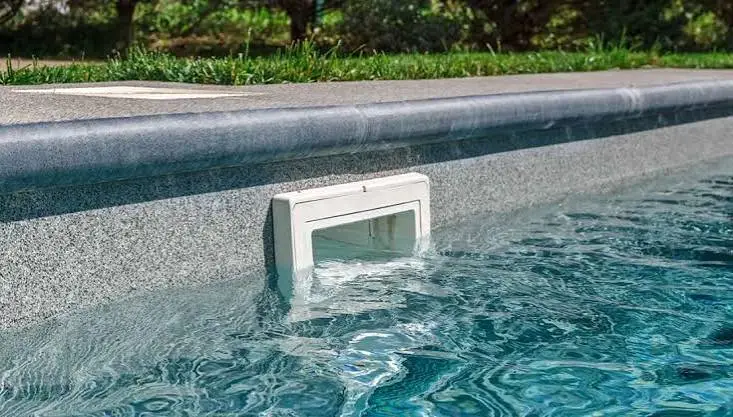
Pool Skimmer Installs
Skimmer placement matters more than people think. On pools with unusual water flow, like vanishing edges or oddly shaped shallow ends, an undersized skimmer means someone’s out there with a net every few days. We size and place skimmers around how water actually moves in that specific pool.
Pool Lights
Older fixture housings, especially anything installed before the mid-2000s, usually don’t accept current LED retrofit kits. That means a full swap, not a bulb change. Since it requires opening the shell wall anyway, we do it during resurfacing.
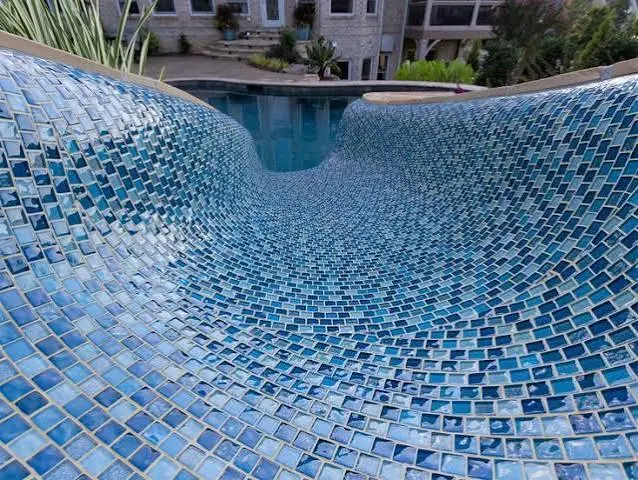
Waterline Tile
The waterline tile shows wear first, generally. Mineral rings, UV fading, loose grout. It sits at the toughest spot in the pool: constant sun, constant water contact. Replacing it during resurfacing means the whole surface starts fresh together instead of one section aging faster than the rest.
Pool Coping
Coping tells you what’s happening below the surface before anything else does. On a good number of the hillside properties we’ve worked on, coping separation showed up a full season or two before any other visible issue. Fixing coping before resurfacing keeps the new finish from cracking at that same edge later.
Pool Crack Repair
Cosmetic cracks follow the plaster and don’t go anywhere. Structural cracks run in a line and mean something moved. On one negative-edge pool overlooking Lake Austin, what looked like a hairline surface crack turned out to trace all the way to a settled footing. Engineering assessment first, resurfacing second, in cases like that.
Pool Railings & Ladders
Anchor points wear out quietly. A loose railing anchor often gets blamed on a shell leak when it’s really just corroded hardware. We check and replace these during resurfacing since the surface is already open anyway.
Pool Finish Options for Every Backyard
Finish choice affects how often you’re back here again. Some materials handle mineral-heavy water better than others.
White Plaster
Cheapest option, first to show scale. Lasts 7 to 10 years typically. Makes sense if you’re not planning to stay in the house long-term.
Quartz Finish
Holds up better than plain plaster against mineral buildup. Commonly lasts 10 to 15 years. A frequent upgrade choice for homeowners tired of resurfacing every 7 years.
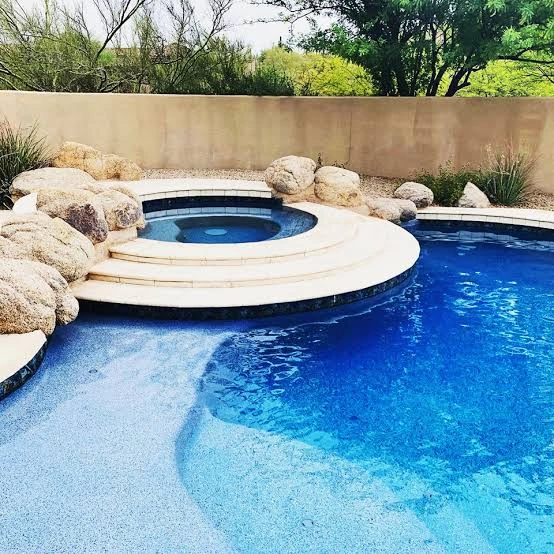
Pebble Finish
Durable, textured, pairs well visually with the natural limestone landscaping common on hillside lots here. Typically 12 to 20 years.
Pebble Tec® & Pebble Sheen®
Same durability, different stone size. Tec is coarser underfoot; Sheen is smoother. On negative-edge pools, Sheen sometimes gets picked for the weir edge since debris shows up more clearly on the finer texture, making it easier to keep clean.
Aggregate Pool Finishes
Costs more, resists chipping and UV fading better than plaster. Worth considering on west-facing lots that take direct afternoon sun for most of the day.
All Tile Pools
Most durable against mineral staining since tile doesn’t absorb minerals. Highest upfront cost. This is what we install most often on the larger custom pools in this neighborhood.
Common Signs Your Pool Needs Resurfacing
Rough or gritty texture underfoot
Usually the earliest sign. Scale building up faster than routine cleaning removes it.
Flaking plaster
Small pieces settling on the pool floor. A step beyond rough texture, and a sign the finish is near the end of its life.
Cracking along a straight line
Different from surface hairline cracks. Can mean shell or footing movement, particularly on sloped lots, and needs inspection before resurfacing.
Persistent staining
From minerals, algae, or organic debris. Some lifts with chemical treatment. Deep or widespread staining usually means the material itself has absorbed it.
Water loss beyond normal evaporation
Roughly a quarter to half inch per week is typical here. More than that often points to a crack rather than evaporation.
Exposed concrete
The finish is gone completely at this point. No protective layer left. Full resurface is the only real option.
About Pool Resurfacing Austin Tx
Pool Resurfacing Austin Tx has served West Lake Hills, Texas since 2004, including homes near Crystal Creek Drive, Southwest Parkway, and West Lake Hills Boulevard.
A lot of our work involves custom gunite pools built during the neighborhood’s growth period in the 1980s through early 2000s. We’ve handled everything from straightforward replasters to hillside remodels requiring hand-carried materials down steep access paths. Every project starts with an inspection, not a standard quote, because these pools don’t age the same way twice.
We’re licensed, bonded, and insured, and our resurfacing and replastering work comes with a workmanship warranty.
Why Homeowners in West Lake Hills Choose Pool Resurfacing Austin Tx
Inspection comes before any quote
Whether the issue is cosmetic, mineral-related, or structural gets confirmed first, not assumed.
Hillside and negative-edge pools aren't unfamiliar territory
Two decades of equipment access challenges, footing conditions, and unusual pool geometry have shaped how these projects get handled.
Local water chemistry factors into every finish recommendation
The wrong material choice here often means resurfacing again years earlier than expected.
Finish recommendations match the homeowner's actual goals
It is not a default option. Lowest cost now and lowest maintenance over 15 years call for different materials, and that gets sorted out upfront.
Structural issues get flagged as structural
A crack that needs an engineer doesn’t get quietly resurfaced just to close the job faster.
Frequently Asked Questions About Pool Resurfacing in West Lake Hills, Texas
How long does pool resurfacing take?
One to two weeks, usually. Most of that time is the new finish curing properly before the pool gets refilled. Rushing this step weakens the surface, so we don’t shortcut it.
How much does pool resurfacing cost in West Lake Hills, Texas?
Depends on size, current condition, finish material, and site access. A pool with a tough driveway or steep backyard access can cost more just in labor logistics. We quote after seeing the site in person.
How often should a pool be resurfaced?
Plaster: 7 to 10 years, sometimes less with heavy mineral exposure. Quartz and aggregate: 10 to 15 years. Pebble: 12 to 20 years. Tile: often past 20.
What is the difference between pool resurfacing and pool replastering?
Replastering is one type of resurfacing, specifically using plaster. Resurfacing also covers quartz, pebble, and tile finishes.
Can pool resurfacing fix cracks and structural issues?
Surface cracks, yes. Structural cracks need an engineer first. Resurfacing over a structural issue tends to fail again quickly, sometimes within a season.
Do I need a permit for pool resurfacing in West Lake Hills?
Usually not for standard resurfacing. Larger structural or remodeling work might. We check this against your specific project.
How do I know if my pool needs resurfacing or just repair?
One crack or a small stain, probably just a repair. Rough texture across the whole surface, heavy scaling, or exposed concrete means it’s time to resurface.
What pool finish lasts the longest?
Tile, generally past 20 years. Pebble is close behind at a lower price point.
Do you offer free pool inspections and quotes?
Yes, before any work starts. We look at surface condition and site factors like slope or access, then give you a straight recommendation.