
Pool Resurfacing Canyon Lake, Texas
Our Resurfacing/Remodeling Process
We value your schedule and work quickly!
Reach Out For Your Free Quote
Professional Property Review
Honest Service Costs
The Transformation Begins!
Professional Pool Resurfacing Services in Canyon Lake, Texas
Most Canyon Lake pool surfaces start breaking down long before homeowners notice. Years of intense Texas Hill Country sun, mineral-rich water, and wide seasonal temperature swings gradually wear plaster thin. By the time cracks, rough patches, or stains show up, the damage has usually been building for a while.
Canyon Lake sits in an area with notably calcium-rich water, driven by the limestone geology common across the Hill Country. Local water conditions speed up plaster etching and scaling compared to areas with softer water. Most plaster finishes are commonly cited as lasting 10 to 15 years, but dissolved minerals in this region tend to shorten that window.
Many of the pools we inspect around Canyon Lake, including properties near Canyon Lake Boulevard, Crystal Creek Drive, and the neighborhoods around Startzville, were built during the area’s residential growth years and are now reaching the point where the original plaster is nearing the end of its service life.
Pool resurfacing Austin Tx addresses this wear before it turns into a structural repair. Our technicians are licensed, bonded, and insured. If your pool shows cracking, roughness, or dull color, schedule a free pool inspection and get a straightforward quote before the damage spreads further
Pool Resurfacing Near Me
Our Pool Resurfacing & Remodeling Services in Canyon Lake, Texas
Pools around Canyon Lake face a specific set of conditions: mineral-heavy water, strong UV exposure, and temperature shifts between summer heat and winter cold snaps. These factors shape which repairs come up most often and how each one should be handled.
Pool Remodeling
Multiple pool systems tend to age out around the same time. A pool with worn plaster often also has an outdated tile line or failing lights, which is why a full remodel makes sense once several issues surface together rather than one at a time.
Pool Resurfacing
Resurfacing replaces the top layer of your pool’s interior without rebuilding the shell. Mineral scaling often shows up on the surface before any visible cracking starts, especially in this area. Resurfacing removes that damaged layer and restores a clean, watertight finish.
Pool Replastering
Replastering strips old plaster down to the shell, repairs any exposed concrete, and applies a fresh coat. Early-stage etching frequently turns up on the shell itself during this process, particularly near the waterline where mineral deposits tend to concentrate.
All Tile Pools
Full-tile interiors are less common but do show up, especially on older lake-area properties. Grout inspection and individual tile repair matter more here than plaster reapplication. We treat all-tile pools as their own category, since the repair approach is different from a plaster-based surface.
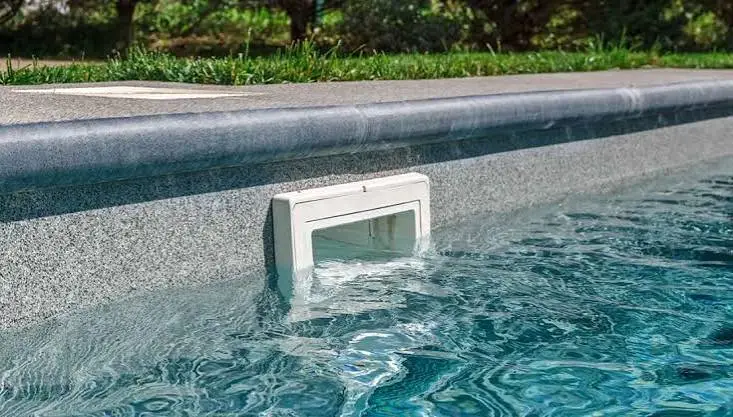
Pool Skimmer Installs
A functioning skimmer keeps debris out of the filtration system. Homes near heavier tree cover around the lake tend to see skimmer baskets fill up faster during fall. Skimmers get replaced as part of resurfacing or as a standalone job when the housing cracks or the flap fails.
Pool Lights
By the time a pool needs resurfacing, older light fixtures often have degraded gaskets. A failed seal around the light niche can let water in and undermine a fresh plaster job in that exact spot, so this gets checked during every inspection.
Waterline Tile
The waterline takes the brunt of mineral buildup, since deposits concentrate right where the water surface sits. This is usually the first place scaling or cracked grout appears during an inspection, and replacing it keeps the new plaster line clean going forward.
Pool Coping
Coping seals the transition between the pool shell and the deck. Expansive clay soil, common in parts of the Hill Country, can cause slight shifting over time and open small gaps at the coping line. That movement gets ruled out before assuming a coping issue is purely cosmetic.
Pool Crack Repair
Not every crack comes from plaster age. Soil movement is a real factor on sloped lake-area lots, and it produces a different crack pattern than one caused by wear alone. Identifying the actual cause determines whether a patch or a deeper structural repair is the right fix.
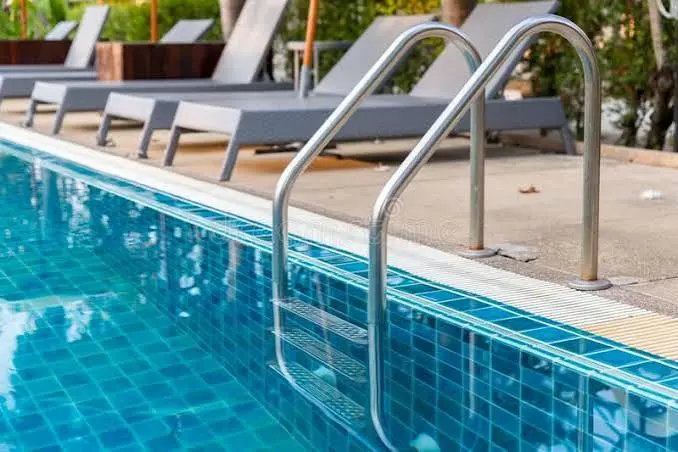
Pool Railings & Ladders
Metal anchors and hardware corrode faster where water carries a heavier mineral load. Anchor points get checked for looseness or rust during every resurfacing job, since a railing failure is a safety issue first and an appearance issue second.
Pool Finish Options for Every Backyard
Finish choice affects more than looks. Water hardness and sun exposure change how each option performs over the years, and that shows up clearly in the pools we inspect around Canyon Lake.
White Plaster
White plaster is the most affordable option, but it’s also the most sensitive to calcium-rich water. In our experience, plaster in this area often begins showing noticeable etching earlier than the 10-to-15-year lifespan commonly cited for milder water conditions. Regular water balancing slows this down but doesn’t stop it entirely.
Quartz Finish
Etching shows up less often on quartz-infused plaster than on standard plaster in the pools we service locally. It resists staining from mineral deposits more effectively and tends to hold its color longer under consistent sun exposure.
Pebble Finish
The exposed aggregate surface on pebble finishes holds up noticeably better against local water conditions than smooth plaster does. This makes it a common upgrade for pools that see heavy use or less frequent chemical maintenance.
Pebble Tec® & Pebble Sheen®
These branded pebble products differ mainly in texture. Pebble Sheen® uses smaller pebbles for a smoother underfoot feel, while Pebble Tec® has a coarser texture. Both tend to perform well against the mineral content typical of Canyon Lake water.
Aggregate Pool Finishes
Blending plaster with quartz, glass beads, or additional pebble content generally outlasts standard plaster in areas with heavier mineral content, since the aggregate surface resists the etching pattern that affects smooth plaster first.
All Tile Pools
Plaster etching isn’t a concern with tile, since ceramic and glass surfaces don’t erode the same way. The tradeoff is grout maintenance and a higher upfront cost. For pools already converted to full tile, repairs focus on grout lines and individual tile replacement rather than traditional resurfacing.
Common Signs Your Pool Needs Resurfacing
These are the issues that come up most often during inspections around Canyon Lake, roughly in the order they tend to appear.
Surface Cracking
Hairline cracks often show up first near the waterline or around stress points like steps and corners. Wider cracks can point to shell movement rather than surface wear alone.
Peeling Plaster
Poor original application or long-term chemical imbalance usually causes plaster to separate from the shell. Once peeling starts, it doesn’t resolve on its own.
Rough Surface
This is the most common complaint we hear from Canyon Lake homeowners. Calcium-rich water speeds up the breakdown of the smooth top layer, exposing the coarser aggregate underneath sooner than it might in areas with softer water.
Plaster Flaking
Loose plaster particles cloud pool water and clog filtration equipment. Flaking is typically an advanced sign of wear, often following visible etching.
Surface Wear
Thinning plaster and fading color build up gradually from sustained UV exposure. Texas summers put more cumulative sun stress on a pool surface than milder climates do.
Stains
Mineral staining is common locally due to dissolved minerals in the water supply, and it can look similar to algae staining at first glance. Testing determines the actual cause, since the treatment differs.
Water Loss
A consistent drop beyond normal evaporation usually points to a crack or gap somewhere in the shell or plumbing. Structural integrity gets checked before recommending a resurface.
Concrete Exposure
Once plaster wears through completely, the underlying concrete shell is exposed to water and chemicals directly. This accelerates structural damage and needs attention quickly.
Surface Discoloration
Uneven or blotchy coloring often results from mineral deposits reacting unevenly with the plaster surface, something we see more often here than in regions with softer water.
About Pool Resurfacing Austin Tx
Pool Resurfacing Austin Tx serves homeowners in Canyon Lake and the surrounding Austin, Texas area. Our technicians follow standards set by the Pool and Hot Tub Alliance (PHTA), the primary industry body for pool construction and service standards.
Patterns specific to this region show up repeatedly across the pools we service: earlier plaster etching from calcium-rich water, coping movement on properties with expansive clay soil, and UV-driven fading that’s more pronounced here than in milder climates. These observations shape how pools get inspected and which finishes get recommended for Canyon Lake properties specifically, rather than applying a one-size-fits-all approach.
We operate as a family-owned business. If a pool doesn’t need a full resurface, that gets said directly. If it does, the shell condition, the recommended finish, and the reasoning behind both get explained before any work begins.
Why Homeowners in Canyon Lake Choose Pool Resurfacing Austin Tx
Shell Inspection Before Any Work Begins
Cracks, soft spots, and old repair patches get checked before any new finish goes on. Skipping this step is a common shortcut that leads to premature finish failure.
Moisture and Bond Testing
Plaster applied over a damp or improperly prepped shell tends to fail within a few years. Moisture levels and surface condition get checked before any bond coat is applied, which matters more here given how quickly mineral residue can mask underlying shell issues.
Bond Coat Preparation
The bond coat holds the new finish to the shell long-term. Manufacturer application windows and surface prep standards are followed closely, since rushing this step is one of the leading causes of early plaster failure.
Curing Procedures
New plaster needs a specific curing and water-fill schedule to set correctly. Rushing this, especially during Texas summer heat, is a common cause of cracking within the first year. Curing timelines are adjusted based on actual weather conditions rather than a fixed schedule.
Warranty on Workmanship
Installation-related issues are covered under warranty, separate from normal wear over time.
Timely, Communicated Completion
A project timeline is provided upfront, and any changes are communicated as they come up rather than after the fact.
Frequently Asked Questions About Pool Resurfacing in Canyon Lake, Texas
How long does pool resurfacing take?
Most projects take 5 to 10 days from prep to completion, depending on pool size, finish type, and whether structural repairs are needed. Curing adds a few more days before the pool can be filled.
How much does pool resurfacing cost in Canyon Lake, Texas?>
Cost depends on pool size, shell condition, and finish selection. Plaster is the most affordable option upfront, while pebble and quartz finishes cost more but tend to hold up better against local water conditions. A free inspection gives you an accurate number based on your pool’s actual condition.
How often should a pool be resurfaced?
Local water conditions often push that timeline earlier than the 15-year figure sometimes quoted for milder climates. Pebble and quartz finishes generally extend it back out.
What is the difference between plaster, quartz, and pebble finishes?
Plaster is the most affordable but wears fastest under the mineral content common here. Quartz adds moderate durability and better stain resistance. Pebble offers the longest lifespan and holds up best against local water conditions.
Can pool resurfacing fix cracks and leaks?
Surface-level cracks are addressed as part of resurfacing. Structural cracks tied to shell movement or soil shifting need repair first, otherwise the crack will telegraph through the new surface.
Can old plaster be resurfaced without full removal?
Sometimes a new layer can go over sound existing plaster, but this depends on the surface’s actual condition. Significant etching, flaking, or shell exposure means full removal is necessary for proper bonding.
Which finish handles Texas summers best?
Pebble and quartz finishes generally hold color and texture better under sustained sun exposure than standard white plaster, which fades and etches faster under the same conditions.
Can I swim immediately after resurfacing?
No. The pool needs to be filled and the water balanced according to a specific curing schedule, typically several days to a week, before swimming. Swimming too early can damage the new finish before it fully sets.
What water chemistry should I maintain after resurfacing?
New plaster needs closely monitored pH and alkalinity during the first few weeks to cure properly. Given local water conditions, earlier and more frequent calcium hardness checks are worth building into that schedule too.
Will resurfacing increase home value?
A pool in good condition is generally viewed more favorably during a home sale than one with visible cracking, staining, or rough surfaces. Resurfacing addresses the most visible signs of age, which tends to matter more to buyers than the pool’s actual chronological age.